About Me
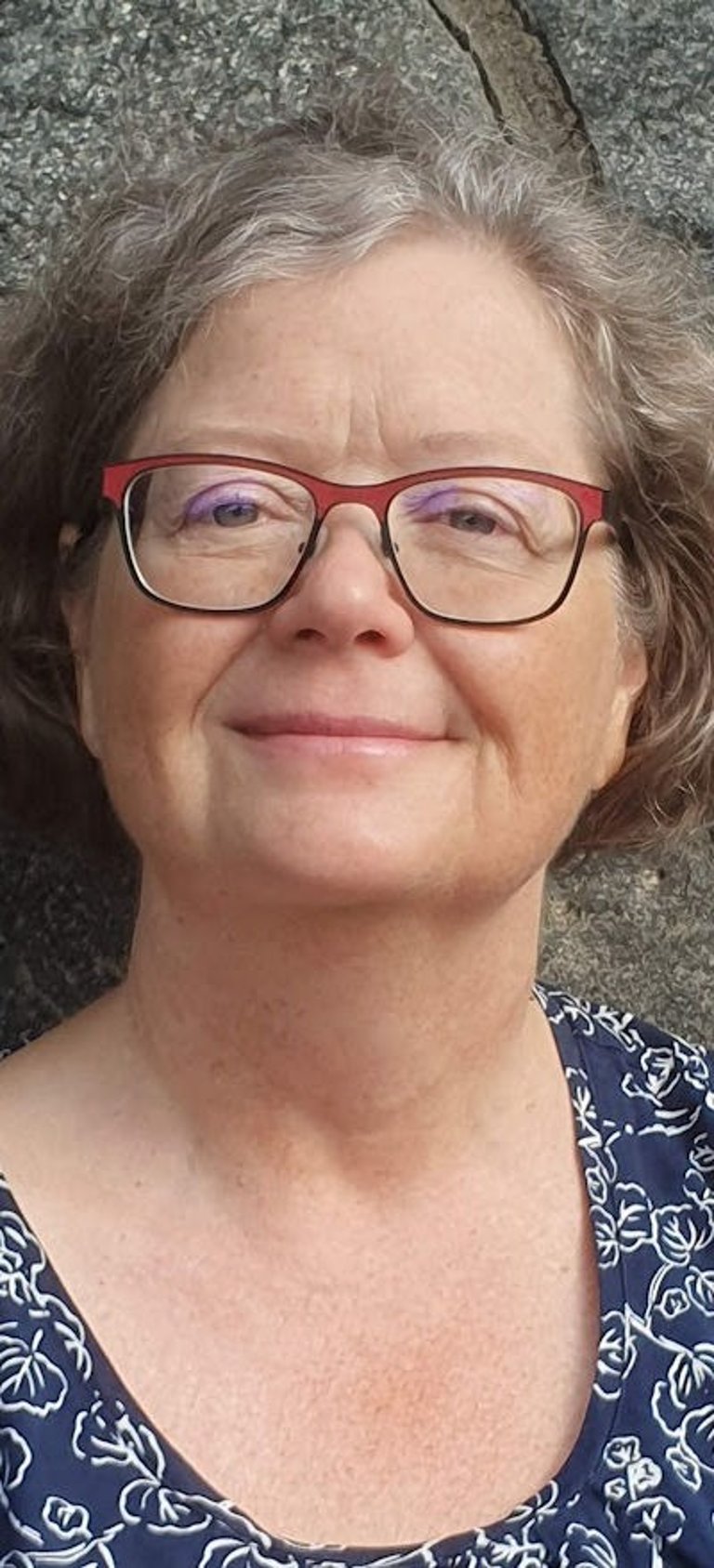
About Me, Charlotta Rönn
I am an independent researcher in education who is passionate about making schools and universities a better place for students. That individuals learn and develop is important both on a personal level and for society at large. Perhaps it has never been more important that citizens learn to think critically and to express their own opinions (and not just repeat the reflections and opinions of others) than in today's information and knowledge society where the use of generative AI is expanding at a breakneck pace.
I am curious and always strive to understand how things are related in different contexts, and I love both learning new things and teaching what I know and have experience with. Before applying for doctoral studies, I worked as an English teacher at an American language center in Casablanca (Morocco) for ten years.
At the American Language Center (ALC), about 5,000 children, young people and adults studied. The school management and textbooks were American, and the language center's policy document stated that we teachers must use collective student-centered teaching methods: pair work, group work and/or mingle activities were to be used in every lesson, the focus was on oral presentation (i.e. talking with others), and the students were to teach each other English by, for example, introducing vocabulary and grammar, and correcting errors in speech and writing. The teacher was to function as an engine that activated the students' interaction with each other and thus their learning. We teachers were to speak as little as possible during the lessons; it was the students who were to speak and practice English.
It was at ALC that my interest in pedagogical issues was awakened, and that led me to start studying pedagogy. I started by distance learning at Umeå University and later defended my thesis at Linnaeus University. It was also my experiences from ALC that laid the foundation for my research interest: to explore where the line is drawn for students between, on the one hand, helping each other in a constructive way that promotes knowledge development and autonomy, and, on the other hand, doing schoolwork for others in a way that can be seen as an obstacle to some students' learning and that creates a dependency on others and/or AI. Where does the individual student's responsibility for their own school performance begin and end from the students' own perspective. In my thesis, and in my subsequent research projects, I strive to map when, how, and if students' interactions with others (or other things, such as chatGPT) in different learning situations turn into interactions that hinder the individual's knowledge development.
In the summer of 2025, I conducted an interview study with students at various Swedish universities and colleges about how they use chatGPT in their studies without the teachers' knowledge. The purpose of my research is the idea that if we know more about which strategies students use (without the teachers' knowledge) in their studies, we will gain valuable tools in the work of optimizing educational contexts so that they are better adapted to the students' needs and circumstances. This, I believe, is important both on an individual level, an organizational level and on a societal level because it is of utmost importance for the individual as well as for society at large that future citizens of society acquire basic skills in reading, writing, and critical review. By developing these skills, they will be able to develop autonomy in our time, which is characterized by fake news and AI-generated information flows. The role of the school is central in this and therefore it is important that schools and universities are places that students experience as meaningful and that at the same time provide them with basic skills as citizens of society. By studying pupils' and students' perspectives on studies and learning, I want to contribute new knowledge about how they themselves view learning and formal education. These are invaluable prerequisites for making schools and universities better for pupils and students – and for ensuring that formal education succeeds in shaping the independent and competent citizens we need in the future.